I started using Notion in late 2019 for writing down my study notes. It quickly evolved into building a "digital garden" with a curated dashboard and cute integrations that were then new and exciting to try out. My basic workflow, though, was mostly just to have some kind of digital notebook where I could write down a few important notes from each course I was taking. Once I coupled it with a database (which was one of the main selling points), my colleagues quickly started noticing how "simple" and "convenient" it was to use.
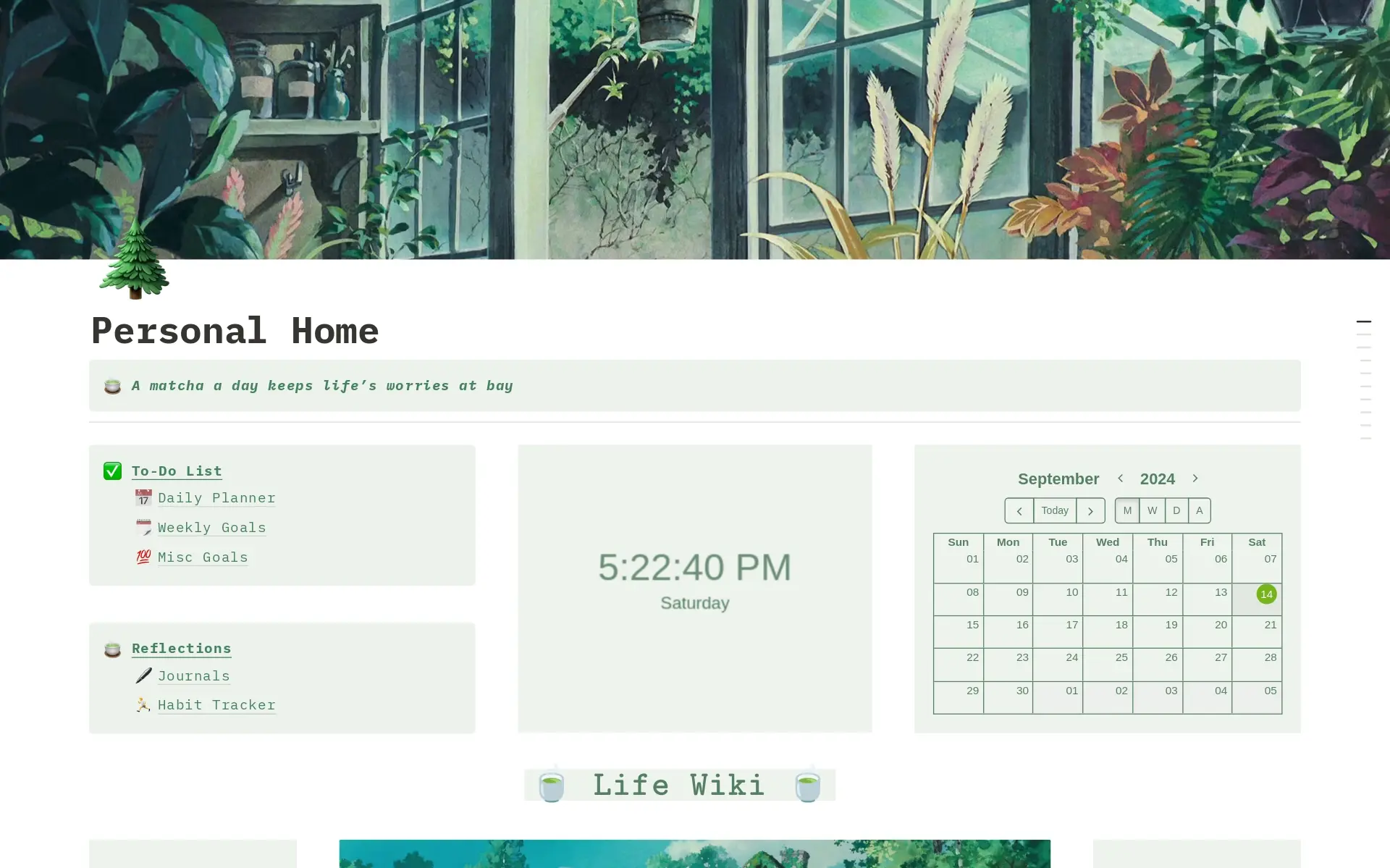
My dashboard looked very similar to this, a lost art :/
They were mostly right, even though I quickly scrapped the "digital garden" idea and returned to a simpler, more straightforward approach. A cute clock animation with a custom script made the personalization factor all the more enjoyable, but I could just look up the time in the top right corner of my screen without needing to "fix" the script from time to time (this was pre-AI, folks).
At the end of my first degree, the simple and effective workflow I built with Notion really just boiled down to MS Word with extra steps. I then switched to Obsidian, which I use to this day. The same trap of trying to build some kind of comprehensive workflow quickly faded on Obsidian; I really just want to write down notes and organize them. Nothing more, nothing less.
Notion started to change from a cool indie project made by Ivan Zhao into something more mainstream and business-oriented. Separate workspaces, a "Marketplace" of pre-built templates, more and more block configurations, and connectors to other tools like GitHub, Drive, etc.
I was able to observe all of this changing while building my startup SipTogether. We used it as a knowledge hub for everything: sprints, documentation, even our website was hosted with an external Notion tool (it was then called Potion; unfortunately, they seem to have scrapped that service since Notion kinda built it itself a few years later). My coworker Jan at that time was a Notion-only guy. He built custom queries for the database views, wanted to do some early automation, and overall tried to tweak it as much as possible. He also grew quite fond of OpenClaw recently, which is understandable given his past experiences with that kind of DIY tool/app.
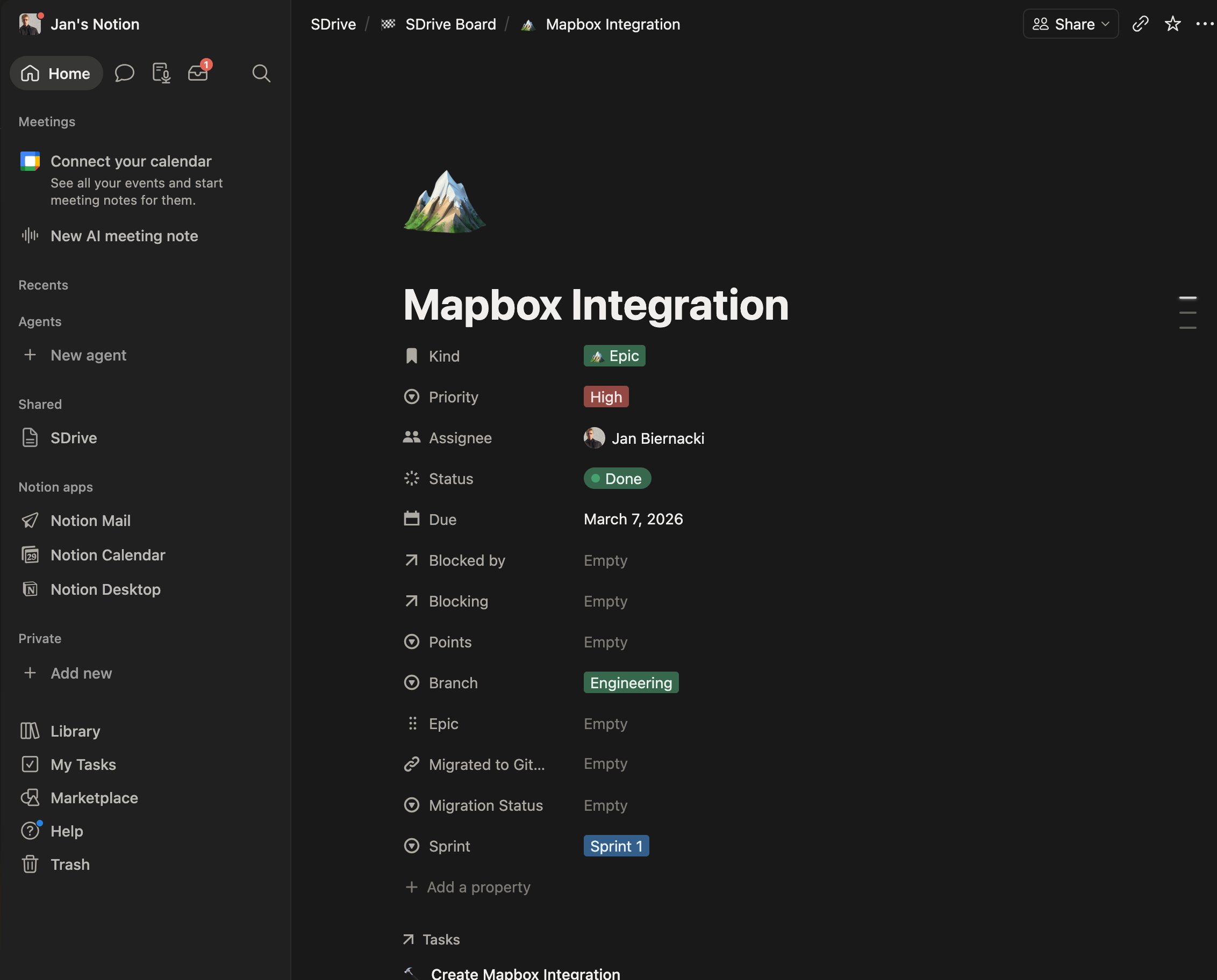
A few weeks ago I was testing out whether I could rekindle my love for Notion by testing it out for a side project.
I think I am not the only person Notion alienated with its plethora of tools. Since I last used it personally, it has grown into the "Everything" App and has been slowly outgrowing the knowledge management system it started with. Especially now, with AI-powered tools like the chat window being able to transform database views into different formats and add and remove blocks, it has started to metastasize into something that is hard to manage as a single cohesive system or a clear value proposition. Of course, financially speaking, it was the best bet to sell to big orgs instead of focusing on measly subscription fees from the likes of myself.
This post is not about Notion, though; I want to talk about Codex.
Going through my usual Twitter doomscroll after being frustrated with a badly formatted PR, I saw this. The meta of big labs is, of course, to tease new models and tools instead of just outright confirming them. Greg Brockman basically greenlit the assumption that Codex will be a full "browser" because "this is the way people will get work done on their computer in 6 months."
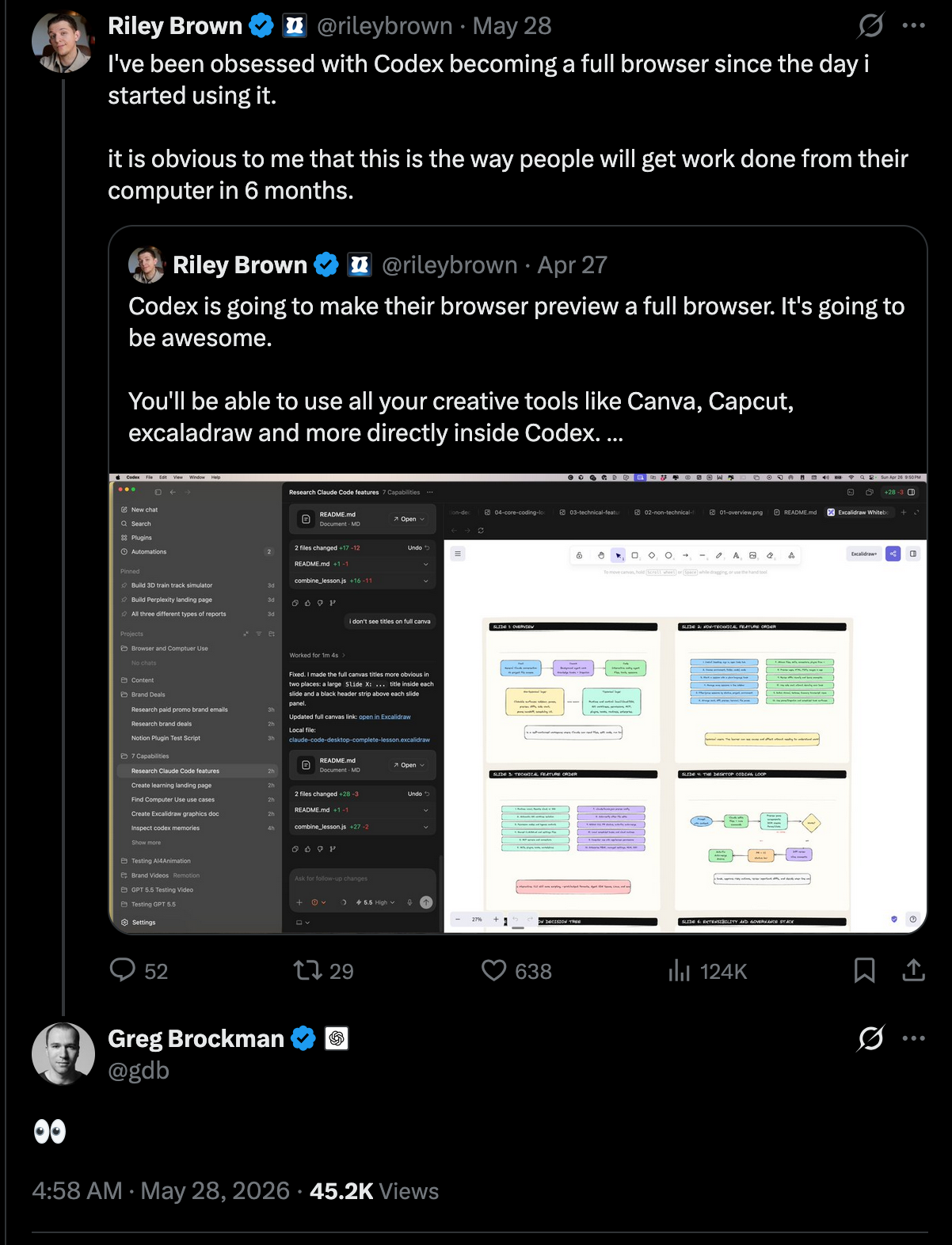
The Xeet in question
I like Codex. I think it is a fine piece of software, and it genuinely helps me in my daily workflow to write, check, test new code, and explore interesting projects. Compared with a few months ago, when the hype was clearly focused on various CLIs, I am glad we are slowly getting through the AI cycle phase of seeing the TUI as the most optimized form of interacting with an AI model. Everybody knows that the Claude App is unusable, and even though they are trying to integrate it everywhere and boast about it being written only by agents, you really tend to wonder who is steering that decision-making process. In contrast, Codex still has a very human-like feel, or as they say, "taste"; it also just runs much better.
Alas, why am I so alarmed about this? Simply put, I just don't want my Codex App to evolve into another Notion. Codex already packs two modes of operation, has a browser interface, can be customized with themes, and has lots of MCP servers and skills that can be plugged in. It has automations, git settings, Computer Use, you get the idea. Thus, my fear is that the Codex team will continue to make it "the tool" - the "Everything App" in a field of "Everything Apps for Everything" - and, similarly to my experience with Notion, I will be left with no choice but to find a "leaner" alternative. It will be some crossbreed between a browser, Copilot, and a terminal, not really fitting any of those categories and making it hard to use. But the KPIs will not care about it.
This is what I think the Notion Trap is. It is an effort to overburden an app that does its job well and has a clear USP by selling it as a one-size-fits-all solution. I am not against progress, and I am well aware that I am not the only Codex user. My problem, though, is that this conversion will be forced; it will sour the core product idea. This will not be another "skill" or another MCP server to connect to. No, the whole application will change its design and will try to mold itself around it.
The Notion Trap is not only applicable to Codex, though; it is a broader way to conceptualize product engineering practices in the coming AI-powered age. Even though I am skeptical of how good the output of each individual model is and of how cost-efficient "token maxing" really is, there is no doubt that a vast array of SWE practices has already changed. The average cost of a line of code has massively shrunk, and it is way easier to produce, connect, and iterate, especially on more saturated codebases with other existing tools. It is easier to assign an agent to write a small extension, grab a coffee in the meantime, and send it as an A/B test candidate for a new feature. The Product Manager will be happy, the Project Manager will smile because he can up your story points, and now, suddenly, you have a "100x Engineer." Smile for the KPI gods.
Imagine trying to build Word, Excel, and PowerPoint into one unified app. There is a reason why, after all these years, they are still distinct tools.
Where is the grumpy decision-maker who says, "Guys, do we need to?" Instead, each new feature is defensible in isolation, but together they blur the product's purpose until the original users feel like guests in a tool built for someone else. Thus, every to-do list app becomes an OpenClaw MCP connector agentic browser, and everything becomes everything.
Thank you for reading.